
'We should hit Pakistan, continue to prepare for surgical strikes, continue to punish Pakistani posts in the proximity of the LoC and we should start adopting counter terrorist measures.' 'That should be India's action without escalating it to a full-fledged war.'
'The incidents have remained confined to the paramilitary forces on both sides with both the armies scrupulously avoiding getting involved. While this incident has been going on, the LOC has been reasonably quiet. Cross border firing achieves no tactical or strategic aims and is more a symptom of hostility. Unfortunately, India has to learn to live with this. Like Israel, we must construct shelters for the border populations and be ready to retaliate in kind,' says Colonel Anil A Athale (retd).

"As far as the demands of some students to shift the NIT campus out of Srinagar is considered, let me make it clear that it won't be possible," she said.

'China's growing nexus with Pakistan and the two countries' unresolved territorial disputes with India continue to pose a formidable national security threat to India,' says Brigadier Gurmeet Kanwal (retd).
'If the other side knows you are coming, then you are the guy who is going to be dead.'

The valley is under the iron grip of the armed forces and Pakistan does not have the military power or political support to change the status quo, observes Colonel Anil A Athale (retd), after a recent visit to Kashmir.
'It is purely based on real-time hard intelligence.' 'Timing is important. When you are attacking at 3.30 am, then everybody will be in the academy of terrorists.' 'If you attack at 10 am then someone will be out, so timing is very important.' 'Therefore, 3.30 am is the time when every terrorist is sleeping.'
'For Pakistan, the comfortable old calculations and certainties are no longer valid.' 'Strikes on Indian targets now carry a high risk of retaliation and escalation,' notes Ajai Shukla.

'When there are two hostile armies operating in close proximity, moral ascendancy is very important -- and that is something, I think, we achieved.' 'What is important is the will and determination of a country.' 'That you are willing to do something about terror that is coming from across the border and that is the message that was sent out.'
'We don't want confrontation; we are trying to build a cooperative relationship in which both sides have stakes in producing an improving climate of relations and responsible behaviour.' What does Shiv Shankar Menon, one of India's most brilliant diplomats and the former National Security Advisor, think of the Modi visit to the US, the Chinese stand-off in Ladakh and the situation on the LoC?

'Until India fully absorbs the fundamentals of international relations, it will continue to get evil for good,' says Brahma Chellaney.
'There is hope that in the next 48 to 72 hours there will be some kind of movement forward to de-escalate and not heighten the tension.'

'Pakistan will try to escalate covert operations through terrorism,' says Dr Shalini Chawla.

She said Modi has the mandate to take bold decisions on the lines of Atal Bihari Vajpayee for the resolution of the problems in and around Jammu and Kashmir.

War is as grand and consummate as love in Bollywood.

The clichd path of conducting 'uninterrupted and uninterruptable' bilateral dialogue with Pakistan to improve ties remains unimplemented and un-implementable under prevailing circumstances that are unlikely to alter in the near future, says Rahul Bedi.
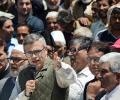
Former Jammu and Kashmir Chief Minister Omar Abdullah on Saturday sought to link the spate of terror attacks in Sopore area with Defence Minister Manohar Parrikar's alleged remark about revival of 'Ikhwanis', an outfit of reformed militants in the state.

The start of Indian lobbying in the US can be traced back to Pakistan's anti-India lobbying. Policy wonk Ashok Sharma documents this journey and its catalytic role in transforming the US-India relationship.

What India has failed to acknowledge is that sub-conventional war is the name of the game and irregular forces have emerged with greater strategic value over conventional and even nuclear forces, and reliance purely on conventional force and diplomacy is grossly inadequate, says Lt Gen Prakash Katoch (retired).

We reproduce Aditya's letter to Rajdeep Sardesai in its entirety:
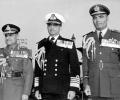
'He was an embodiment of old school courtesy and grace. It was embarrassing when he would insist on receiving and seeing off guests at the gate of his house! A trait he shared with another of great soldiers of India, Sam Manekshaw!' remembers Colonel Anil A Athale (retd).

In the absence of a conducive environment, India should not show any "hurry" to hold talks with Pakistan when Prime Minister Manmohan Singh visits New York later this month, BJP president Rajnath Singh said.

Read what the ex-chief of R&AW, A S Dulat, told our readers on Rediff Chat!

'Pakistan's military leaders have to accept that the policy of proxy wars has damaged Pakistan more than it has damaged the enemy,' says former R&AW chief Vikram Sood.

'Our policy seems to be to give away part of J&K, even though we are entitled to the entire state.' 'The Congress has done so, and the BJP is following the same policy.' 'No one is applying their mind to the legal position.' 'Kashmir is not a part of Pakistan under its own constitution.'
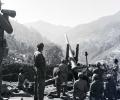
Fifty years ago, India and Pakistan fought a short but bloody war. The author finds out how Sainik Samachar, the defence ministry's journal, reported it.

'It is a very hard won situation that the army has brought about in J&K in 25 years, we don't want to fritter it away...' 'By 2010-2012 the terrorist strength had come down to 300, 400. From a high of 3,000 to 4,000 to 300 to 400 was no mean achievement for the army,' says Lieutenant General Syed Ata Hasnain (retd).

'J&K continues to have the highest concentration of military personnel anywhere in the world and the alienation of the Kashmiri has increased in the last ten years than ever before.'
